Garage Door Stuck Halfway?
A garage door stops halfway because of misaligned safety sensors, blocked or damaged tracks, worn rollers, broken torsion springs, frayed lift cables, or incorrect force and limit settings on the opener. Start with the sensor check. It fixes the problem more often than most homeowners expect.
Why This Happens More Than You Think
This is one of the most frequent service calls garage door technicians handle. It spikes in late summer and early winter because temperature swings affect metal components, rubber seals, and electronic sensors all at once. In warmer, humid regions like South Florida, the combination of moisture, salt air, and heat accelerates track grime buildup and roller corrosion faster than most people realize. In colder states, metal contracts and lubricant thickens, which creates resistance the opener interprets as an obstruction.
The door is not broken in most cases. The system is actually doing its job, protecting itself and you, by stopping when something is off. Your job is to figure out what triggered it.
Is It Dangerous to Leave It Halfway?
Yes, and this deserves to be said upfront before any troubleshooting.
A garage door weighs anywhere from 150 to 400 pounds depending on the material and size. When it is suspended halfway without proper spring tension supporting it, that weight is being held by cables, drums, and an opener motor that was never designed to hold static load indefinitely.
Stop here if you notice any of these:
A visible gap or separation in the spring coil above the door. One side of the door is sitting lower than the other. A cable hanging loose or wrapped unevenly around the drum. The door dropped suddenly from its halfway position. You heard a loud bang from the garage earlier that day.
These are signs of a mechanical failure under tension. Do not pull the red emergency release cord if you see any of them. A free falling garage door causes serious injury. Step back, unplug the opener, and call a emergency garage door opener repair technician before touching anything else.
Causes and Fixes: What Technicians Actually Find
Sensor Misalignment or Dirty Lenses
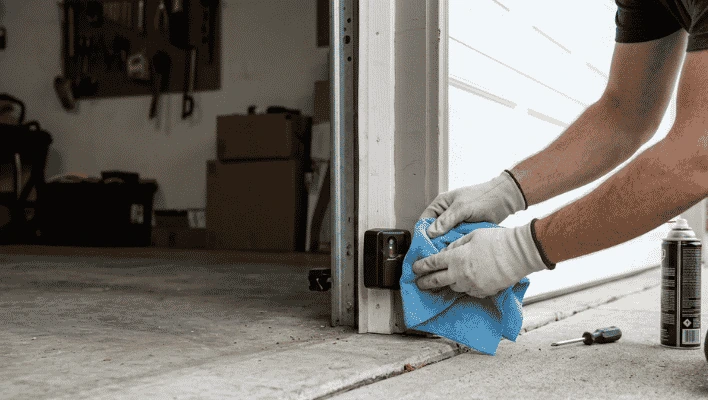
This is the first thing an experienced technician checks because it is responsible for a large percentage of mid travel stops. The photoelectric sensors sit near the floor on each side of the door frame. They fire an invisible infrared beam across the opening. The moment that beam is broken, even by a cobweb or a slight shift in the bracket after someone bumped it with a ladder, the opener stops the door cold.
In garages in humid climates, sensor lenses develop a thin film of condensation residue over time. It builds up slowly and invisibly until one day the beam becomes too weak to register properly.
Check the indicator lights on both sensors. The receiver side typically shows green when aligned and the sender side shows amber. A blinking light means the beam is not completing. Wipe both lenses with a dry microfiber cloth. If a trash can, garden hose reel, or storage box has shifted in front of either sensor, move it. If the lights are still blinking after cleaning, loosen the sensor bracket slightly, angle it until the light goes solid, and retighten.
Time to fix: This fix takes under five minutes and costs nothing.
Debris or Damage Inside the Tracks
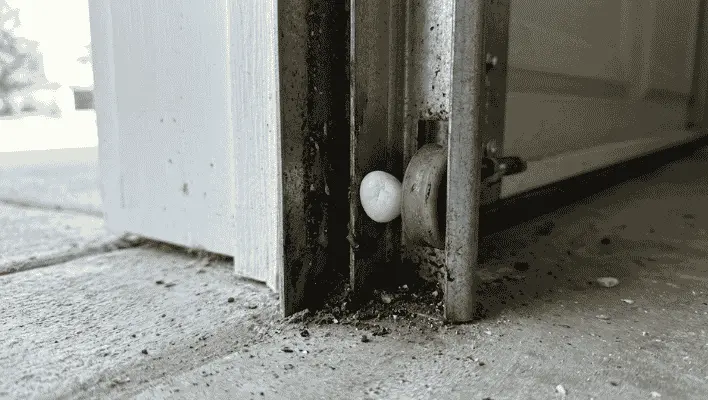
The vertical and horizontal tracks that guide the door need to stay completely clear and straight. Even a small pebble or hardened grease plug creates enough resistance that the opener’s force sensor will halt the door.
On older homes or garages near coastal areas, tracks accumulate a combination of salt residue, humidity condensation, and dried lubricant that builds into a gritty paste over time. It does not block the door visibly, but it creates drag that builds with each cycle until one day the door stops.
Wipe the inside surface of both tracks with a damp cloth. Do not apply grease directly to the track surface because it attracts more debris. Use a silicone based spray only on the rollers themselves. If you see a visible dent or bend in the track, a minor one can sometimes be eased back with a rubber mallet, but anything more than a slight deformation needs a professional to either reform or replace the track section. Forcing a bent track back with too much pressure often makes the misalignment worse.
Worn or Rusted Rollers
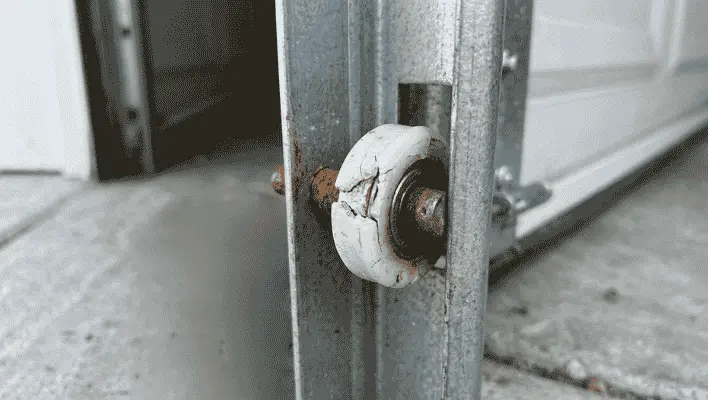
Rollers are the small wheels that carry the door along the tracks. Most doors ship with nylon rollers, which are quieter but degrade faster than steel ones, especially in humid or temperature variable environments. Once a roller cracks, flattens, or rusts at its stem, it starts dragging. The door begins catching at the same spot every cycle until it eventually stops there completely.
Pull the red emergency release cord and manually lift the door slowly. Pay attention to exactly where it catches. Look at the roller at that precise location. A worn roller will often show visible cracking, a wobble, or rust discoloration.
Lubricate the roller stems and the inside of the tracks with a product made for garage doors. If the roller is physically damaged, replacement is the fix. Nylon rollers typically last five to seven years. Steel rollers last longer but can rust in high humidity environments without regular maintenance.
Broken Torsion Spring
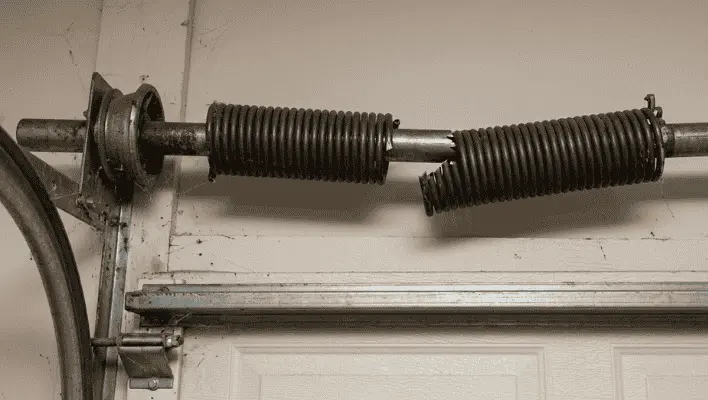
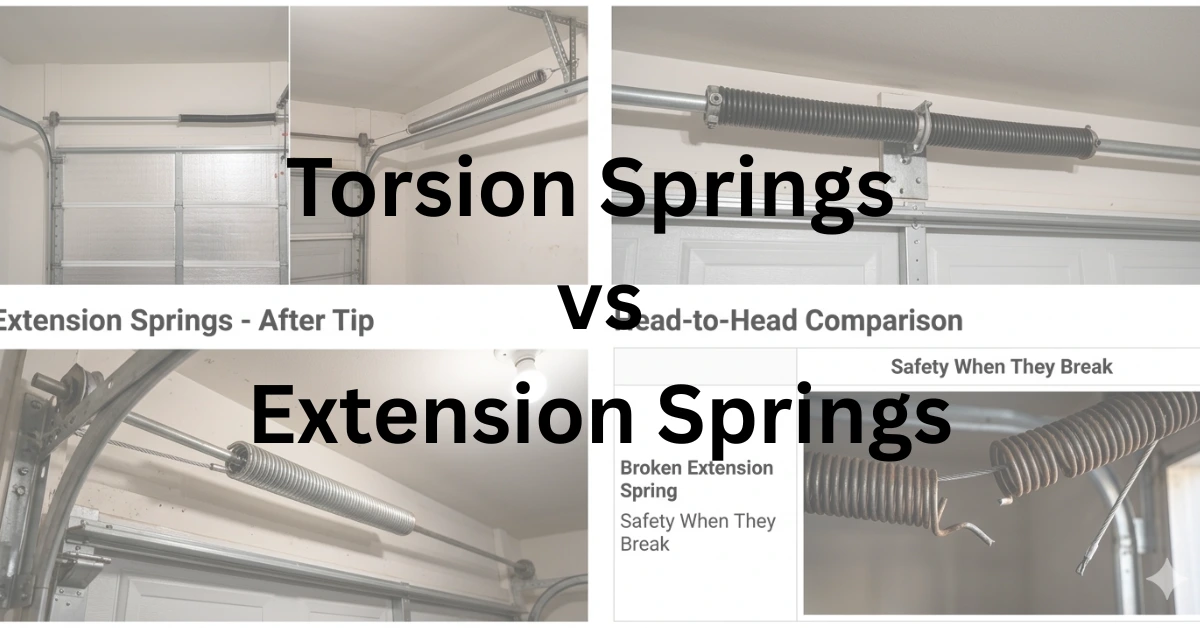
This is the most common serious cause. Torsion springs sit on a rod directly above the garage door and store mechanical energy that counterbalances the door’s weight. Without them, the opener motor is trying to lift 200 to 400 pounds on its own, which it cannot do for more than a few inches before the force sensor stops it.
Springs do not fail gradually in most cases. They snap, usually with a loud report that sounds like something hit the ceiling of the garage. After that, the door feels impossibly heavy when lifted manually.
Look at the spring above the door. A broken torsion spring has a clear gap in the coil, often with the two halves sitting at slightly different heights.
Do not attempt to replace torsion springs yourself. The tension stored in a wound spring is enough to cause broken bones or worse if it releases unexpectedly. This repair requires winding bars, proper training, and the right replacement spring rated for your door’s weight. A licensed technician handles this in under an hour in most cases. The cost is worth it compared to the risk.
Frayed or Displaced Lift Cables
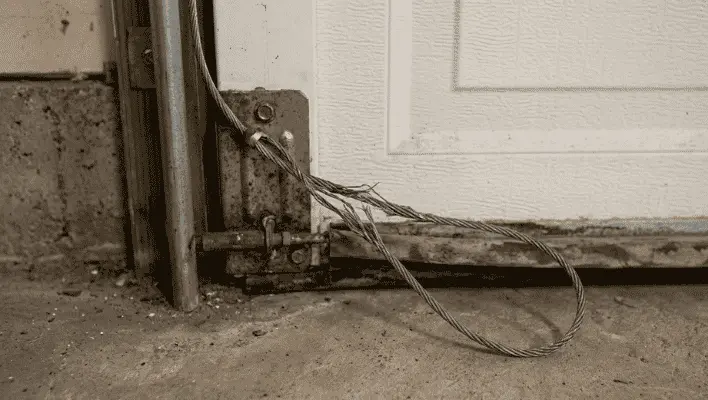
Lift cables run vertically along each side of the door, connecting the bottom bracket to the drums that wind and unwind as the door moves. When a cable frays, slips off its drum, or loses tension, the door loses balanced support and stops.
A cable issue usually shows itself as the door sitting at an angle, with one side visibly lower than the other, or a cable that appears slack or looped strangely near the bottom corner of the door.
Like spring repair, cable work involves components under high tension. A technician needs to handle this.
Incorrect Limit or Force Settings on the Opener
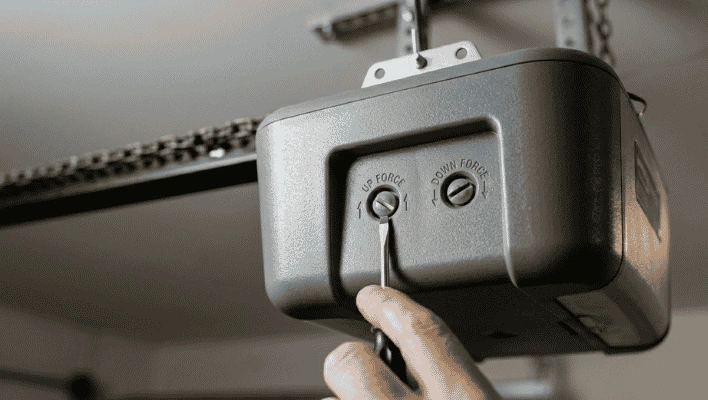
Every garage door opener has two calibration points. The limit setting tells the motor how far to travel before stopping. The force setting tells it how much resistance is acceptable before it interprets something as an obstacle. If the force is set too low, which can happen after temperature changes affect the door’s natural weight and friction, the opener stops the door at resistance levels that are completely normal.
On older chain drive openers, this sensitivity drift happens more often than people realize, especially after seasonal shifts. The fix involves locating the adjustment screws on the motor unit, usually labeled UP FORCE and DOWN FORCE, and consulting your specific opener’s manual to make small incremental increases. LiftMaster, Genie, Chamberlain, and Craftsman all have different adjustment mechanisms. Check the model number on the unit and look up the exact procedure.
Can You Close the Garage Door Manually When It Is Stuck?
Yes, in most cases, but only if the springs and cables appear intact.
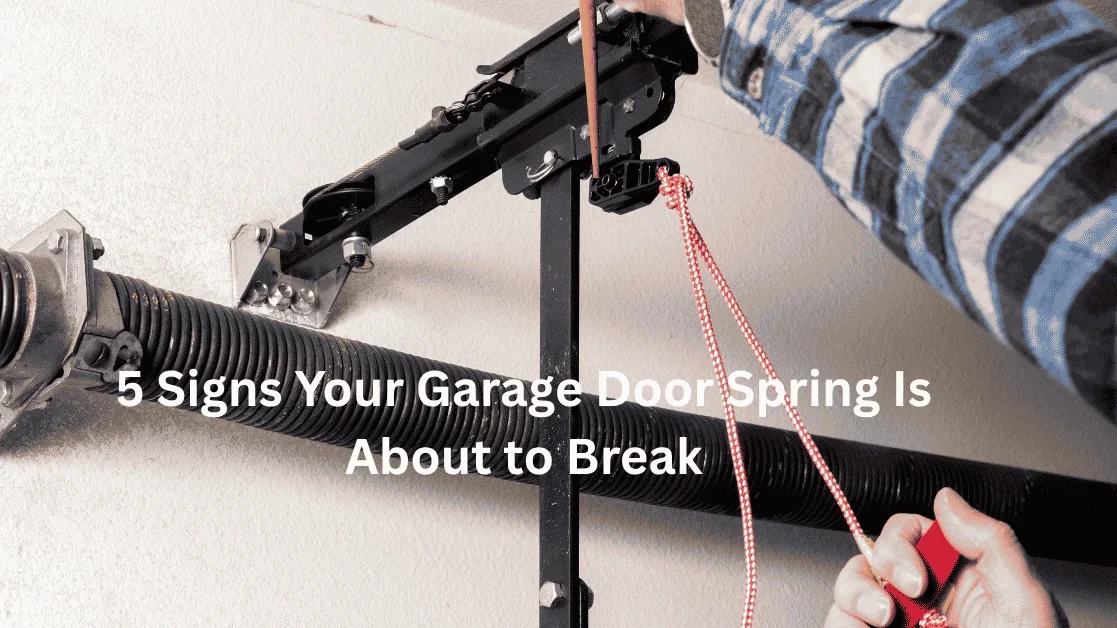
Pull the red emergency release cord that hangs from the opener trolley. This disconnects the door from the drive mechanism. You can then lower the door carefully by hand. Keep your hands on the door, do not let it drop, and make sure the area below is completely clear.
If the door feels unusually heavy or starts to fall rather than glide, stop immediately. That is a sign of broken spring or cable failure, and the door should not be moved until a technician assesses it.
Once manually closed, use a zip tie or clamp on the track above one of the rollers to keep the door from being opened while the issue is unresolved. Lock it from inside if possible.
How Much Does It Cost to Fix a Garage Door Stuck Halfway?
Cost varies depending on the cause.
Sensor cleaning and realignment is typically free if you do it yourself. A technician visit for this alone runs roughly $75 to $150 depending on your area.
Roller replacement runs $100 to $200 for a full set including labor. Track repair or realignment falls in the $125 to $200 range for minor work and can go higher if a section needs full replacement.
Torsion spring replacement is the most common professional repair. A single spring typically costs $150 to $300 installed. Two springs, which is the standard setup on most residential doors, run $200 to $400 depending on door weight and spring rating.
Lift cable repair runs $100 to $200 per cable installed.
Opener limit and force adjustments are usually covered under a general service call, which averages $75 to $150 in most markets.
If you are in Florida or other high demand coastal markets, expect the higher end of these ranges during peak seasons.
Most Common Causes by Garage Door Age
Under 5 years: Sensor misalignment, limit setting errors, and debris in tracks are the most likely culprits. Mechanical components rarely fail this early under normal use.
5 to 10 years: Roller wear becomes a real factor. Nylon rollers approach the end of their useful life. Lubrication neglect shows up as friction and dragging. This is also when force settings start drifting on openers.
10 to 15 years: Spring wear becomes the primary concern. Springs are rated for a certain number of cycles, typically 10,000 on standard springs and 20,000 to 50,000 on higher quality ones. A door used four times daily completes roughly 1,460 cycles per year. By year ten, cheaper springs are approaching the end of life.
Over 15 years: Everything is a candidate. Springs, cables, rollers, and potentially the opener motor itself. At this stage, a full professional inspection is more cost effective than diagnosing issues one by one.
Signs the Problem Is Beyond DIY
Some things genuinely require a professional. Recognizing the line saves you time, money, and potential injury.
Call a technician if the door is visibly tilted or crooked in the opening. If the spring has a visible break. If a cable is hanging loose or has come off the drum. If the door dropped suddenly instead of stopping. If you hear grinding from the motor housing rather than the tracks or rollers. If the door reverses immediately every time you try to close it despite clean sensors.
Attempting to force any of these situations with manual pressure or by repeatedly triggering the opener can cause additional damage to panels, tracks, or the opener unit itself, and turns a $200 repair into a $700 one.
Preventing This From Happening Again
Lubricate rollers, hinges, and spring bars every six months using a garage door specific silicone spray or white lithium grease. Never use WD40 on springs or rollers as a long term solution because it evaporates quickly and leaves a residue that attracts grit.
Test door balance twice a year. Disconnect the opener, lift the door to waist height, and let go. A balanced door stays in place. One that drops or rises has spring tension that needs professional adjustment.
Clean sensor lenses every few months, especially if you live in a dusty, humid, or coastal environment where buildup happens faster.
Watch for changes in how the door sounds and moves. A door that suddenly gets louder, slower, or starts hesitating at a specific point is showing early warning signs. Catching a worn roller or a fraying cable early is far cheaper than an emergency repair.
Frequently Asked Questions
Why is my garage door stuck halfway and won’t move at all?
The most likely causes are a broken torsion spring, a cable off the drum, or a complete motor failure. If manual lifting feels impossibly heavy or the door is sitting at an angle, do not force it. Contact a technician.
Why does my garage door stop halfway and then reverse?
This is usually the safety sensor detecting an obstruction, real or perceived. Clean both sensor lenses, check for anything blocking the beam path, and verify the sensors are properly aligned with solid indicator lights.
Can I open a garage door manually if the spring is broken?
Technically yes, but it will feel extremely heavy because the spring provides most of the counterbalance. For most people, a door with a broken spring is too heavy and awkward to lift safely without assistance. It is better to leave it and wait for a technician.
How much does it cost to fix a garage door that is stuck halfway?
Depending on the cause, repair costs range from free for a sensor adjustment you do yourself, up to $400 or more for torsion spring replacement. Most service calls fall between $100 and $300 for the most common issues.
Why does my garage door stop at the same spot every time?
This almost always points to a physical issue at that specific location on the track, such as a damaged roller, a bent section of track, or a debris buildup at that exact point. Manually inspect the roller and track at that spot.
How do I know if my garage door springs are broken?
Look at the spring bar above the door. A broken torsion spring will have a visible gap or separation in the coil. The door will also feel extremely heavy when lifted manually, and you may have heard a loud bang earlier.
The Bottom Line
A garage door stuck halfway is fixable. Start simple, check sensors, inspect tracks, and try manual operation to isolate where the resistance is. If those basics do not reveal the problem, move to rollers and opener settings. If you find anything involving springs or cables, step away from the repair and contact a licensed garage door technician. Getting it right the first time is always cheaper than getting it wrong.