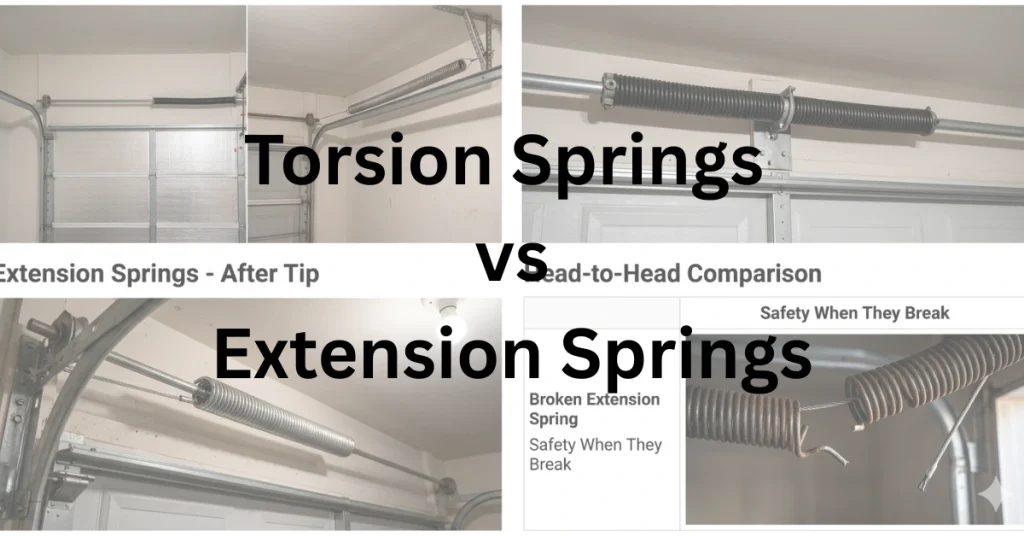
Torsion Springs vs Extension Springs
For most homeowners, torsion springs are the better choice. They last longer (up to 20,000 cycles), operate more quietly, and are significantly safer when they break. Extension springs cost less upfront but require more frequent replacement and carry a higher risk of dangerous failure. Your final choice depends on your garage size, door weight, headroom, and budget.
Your garage door weighs anywhere from 130 to 400 pounds. The only reason you can lift it with one hand or a tap of a button is because of two small but incredibly powerful springs doing the heavy work. And yet most homeowners have no idea which type of spring they have or whether it is even the right one for their door.
This comparison will settle the debate clearly, without the technical jargon, and help you make a confident decision the next time a replacement comes up.
The Core Difference in One Sentence
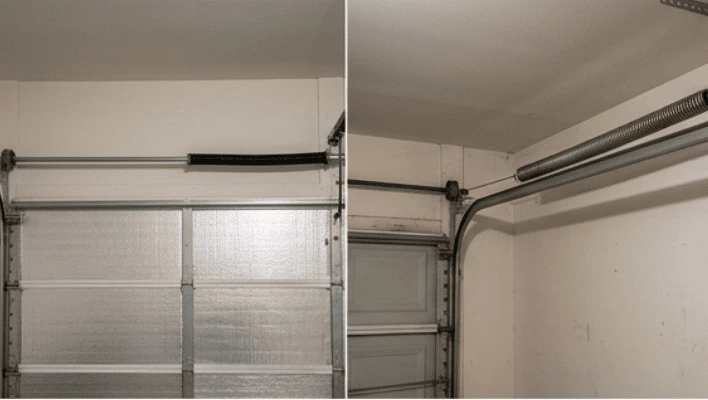
Torsion springs sit above the door and twist to store energy. Extension springs run along the sides of the tracks and stretch to store energy. That single design difference is responsible for every gap between them in safety, lifespan, noise, and cost.
Torsion Springs – How They Actually Work
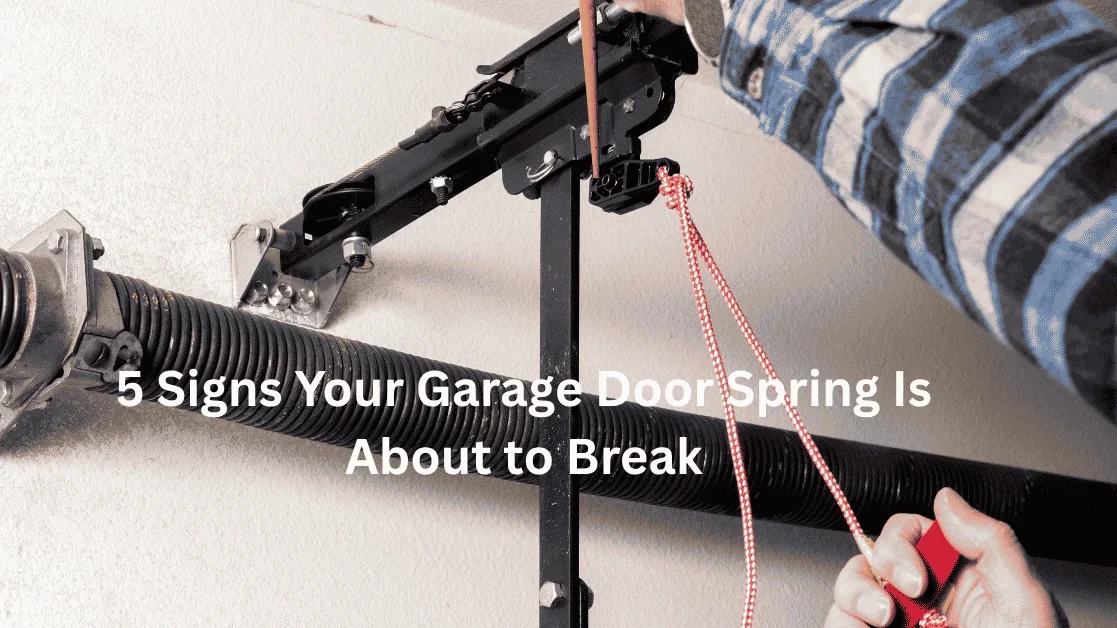
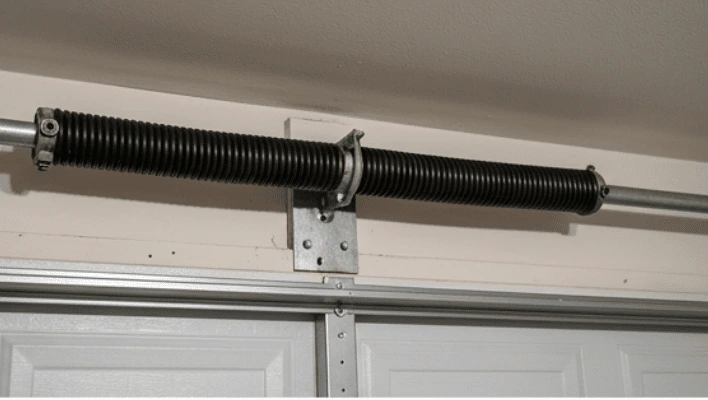
A torsion spring is mounted horizontally on a steel shaft directly above the garage door opening. When the door closes, the spring winds tighter around the shaft, storing mechanical energy. When you open the door, that stored torque releases gradually and evenly, lifting the door in a smooth, controlled arc.
Because the energy is distributed across the entire shaft through winding cones and cable drums on both sides simultaneously, the door rises in a perfectly balanced motion. There is no jerking, no tilting, and very little noise.
Modern residential systems almost always use torsion springs, especially for heavier steel doors, insulated doors, and double-wide garage doors. High-cycle torsion springs made from oil-tempered or galvanized steel can handle between 15,000 and 20,000 cycles before needing replacement.
Pro Tip: If your torsion spring is rated for 10,000 cycles but you use the garage four to six times daily, you are burning through that lifespan in three to four years. Call an expert garage door technician about upgrading to a high-cycle spring (25,000 or 50,000 cycles) during your next garage door spring replacement, the price difference is small and the longevity payoff is significant.
Extension Springs: How They Actually Work
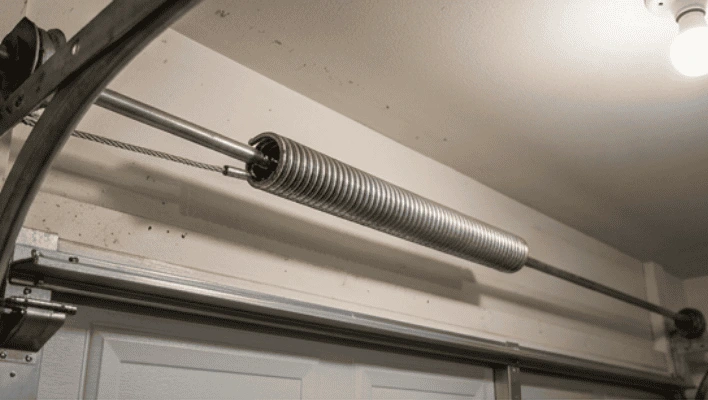
Extension springs are mounted vertically along the horizontal tracks on either side of the door. They stretch outward when the door closes and snap back (contract) when the door opens, using that elastic recoil energy to assist the lift.
Because each spring works independently on its own side, they are not mechanically linked. This setup has been around for decades and is still common in older homes, single-car garages, and spaces with very limited headroom above the door.
The stretch-and-release motion is fundamentally more aggressive than torsion rotation, which is why extension spring systems tend to be louder, bouncier, and harder on the rest of the door hardware over time.
Standard extension springs are rated for around 10,000 cycles, which translates to roughly five to seven years of regular use.
Pro Tip: If you have extension springs, make sure safety cables are running through the center of each spring. Without them, a snapped spring becomes a metal projectile flying across your garage at high speed. This is a non-negotiable safety requirement. If yours are missing, that alone is a reason to call for garage door repair service before anything else breaks.
Head-to-Head Comparison
Here is where the real differences become clear.
Lifespan
Torsion springs last 15,000 to 20,000 cycles under standard conditions, and premium high-cycle versions go well beyond that. Extension springs typically max out at 10,000 cycles. If you replace extension springs twice over the life of a torsion spring, the cost advantage disappears quickly.
Safety When They Break
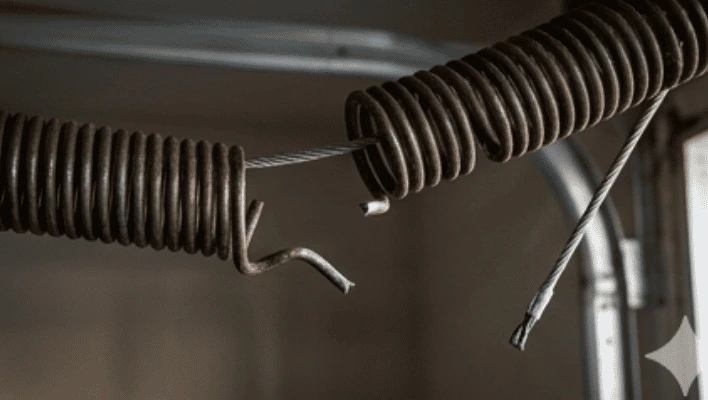
This is arguably the most important factor. When a torsion spring snaps, it breaks in place along the shaft. The winding cones hold both ends, so the spring stays largely contained. It makes a loud bang (you may have read about this in our guide on 5 signs your garage door spring is about to break) but it does not fly apart.
When an extension spring breaks without a safety cable, it can detach completely and whip across the garage with serious force. This is not a rare edge case, it is one of the most common garage door injury scenarios.
Noise and Smoothness
Torsion springs win by a wide margin here. The rotational energy delivery is gradual and balanced across both sides. Extension springs produce more vibration, bouncing, and mechanical noise because of the stretch-and-snap action.
If your door currently shakes or shudders as it moves, and you have extension springs, that is not a track problem or an opener problem. It is the nature of the spring type itself.
Headroom Requirements
This is where extension springs have a legitimate advantage. They mount along the tracks and require minimal space above the door. Torsion springs need at least 10 to 12 inches of headroom above the door opening for proper installation. In garages with low ceilings, this can be a real constraint.
Cost
Extension spring installation typically runs between $150 and $250 including parts and labor. Torsion spring installation runs between $200 and $400. The gap is real but not dramatic, especially when you factor in cycle lifespan and the potential collateral damage from a violent extension spring failure, including bent panels, snapped cables, and track damage that can lead to a garage door getting stuck halfway or worse.
What Happens When Either Spring Fails
Regardless of type, a failed spring creates the same immediate problem. The door becomes dead weight. Your automatic opener motor was never designed to lift the full load of the door without spring assistance, so it either strains dangerously, trips its internal protection circuit, or burns out entirely.
This is why so many homeowners searching for garage door opener repair and replacement end up discovering the opener was not the issue at all. The spring failed first, the opener took the overload, and now both need attention.
Pro Tip: Never run your automatic opener on a door with a suspected spring failure. Every cycle puts the full dead weight of the door through the opener’s drive gear, belt or chain, and motor. What starts as a $300 spring repair can turn into a $600 combined repair if the opener takes the damage. Disconnect the opener and leave the door closed until a technician arrives.
Which Spring Type Is Right for Your Home?
There is no universal answer, but there are clear situations where one wins over the other.
Choose torsion springs if:
Your door is heavy (steel, wood, or insulated), you use the garage multiple times a day, you have young children or pets in the household, you have standard or high headroom above the door, or you want to minimize long-term repair frequency. Torsion springs also pair better with modern smart openers and belt-drive systems where quiet operation matters.
Extension springs may still work for you if:
Your garage has extremely limited headroom (under 10 inches above the door), you have a lightweight single-car door with low daily use, and you are working within a tight short-term budget. Just make sure safety cables are always in place.
A word on older homes in Sunrise, FL:
Florida’s humidity and heat cycles accelerate metal fatigue in springs. Corrosion builds up faster, coil friction increases, and springs lose tension more unpredictably than in dry climates. This makes the lifespan advantage of torsion springs even more pronounced here. It also makes routine lubrication and inspection through a garage door maintenance service more important than in most other regions.
Pro Tip: In South Florida’s climate, use a silicone-based garage door lubricant spray on your springs every three to four months rather than the standard six-month schedule. Humidity gets into the coils faster here, and a thin protective coating applied regularly is the single most cost-effective way to extend spring life regardless of which type you have.
Thinking About Upgrading Your Entire System?
Sometimes homeowners discover their spring type does not match their current door. A heavy double-wide steel door running on old extension springs is a mismatch that leads to fast wear, uneven movement, and repeated repair bills. If your door is more than 12 to 15 years old and you are already looking at spring replacement, it may be worth exploring a new garage door installation that comes spec’d with the correct spring system from the start.
Getting the spring type right at the installation stage saves you from retrofitting later and ensures the counterbalance system, cable drums, winding hardware, and opener are all calibrated to work together.
Frequently Asked Questions
Can I switch from extension springs to torsion springs?
Yes, and it is one of the most common upgrades technicians perform. It requires installing a torsion shaft, cable drums, and winding cones above the door, which your existing setup likely does not have. A technician can assess whether your header space allows for it.
Do I need to replace both springs at once?
With extension springs, yes, always replace both at the same time. They age at the same rate, so if one breaks, the other is close behind. Replacing only one creates an imbalance that puts uneven stress on the door and tracks. With torsion systems that use two springs on one shaft, the same rule applies.
How do I know which type I currently have?
Look above the door. If you see a single horizontal spring (or two springs) mounted on a metal shaft crossing the full width of the door opening, those are torsion springs. If you see springs stretching along the horizontal tracks on either side of the door, those are extension springs.
Is DIY spring replacement ever safe?
No. Torsion springs hold hundreds of pounds of rotational force, and extension springs under tension can cause serious injury if a coil slips or a tool loses grip. This is one of the few garage door tasks where professional service is not a recommendation but a safety requirement.
The Bottom Line
Torsion springs are the better long-term investment for the vast majority of homeowners. They last longer, operate more smoothly, break more safely, and protect the rest of your door system from premature wear. Extension springs are a workable solution for specific situations, mainly low headroom and light-use doors, but they come with real trade-offs in safety and lifespan.
If you are unsure which type you have, or if your current springs are showing any of the warning signs covered in our 5 signs your garage door spring is about to break guide, do not wait for a full failure. A professional inspection takes thirty minutes and can prevent a much more expensive repair down the road.