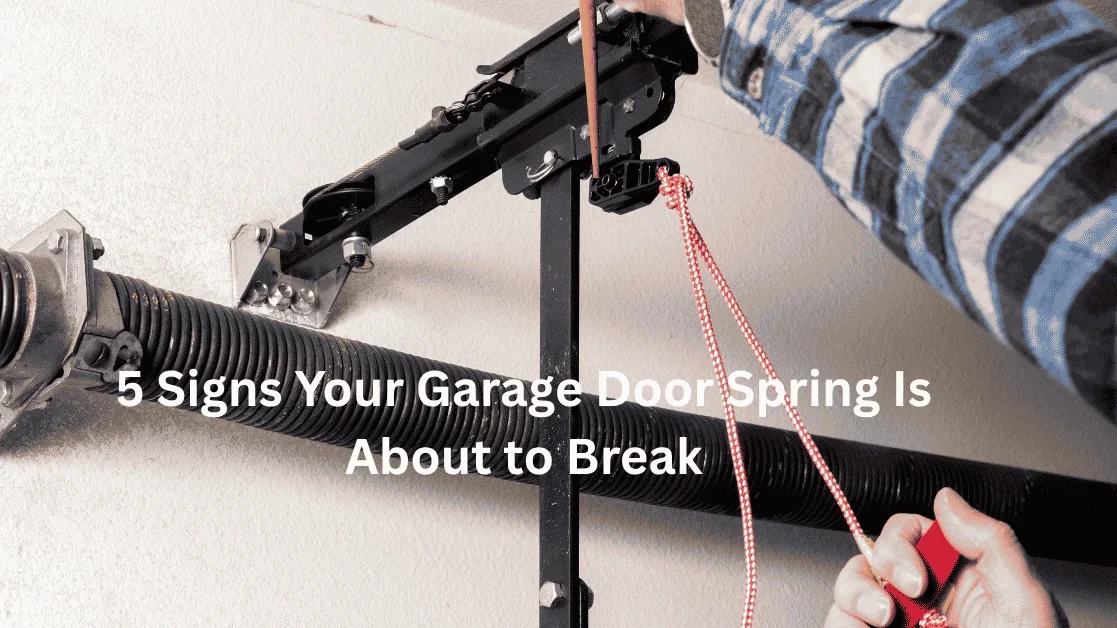
Your Garage Door Spring Is About to Break?
The most common signs your garage door spring is about to break include a door that feels unusually heavy, slow or uneven movement, a loud bang from the garage, visible gaps in the torsion spring coil, and a struggling opener motor. Catching these early saves you from a complete system failure and a costly emergency repair.
Most homeowners never think about their garage door springs until the door simply refuses to open. That is usually the worst moment to find out. A garage door spring does not just snap overnight. It sends warnings first. The problem is, most people do not know what to look for.
This guide breaks down the five clearest signs that your spring is on its last legs, so you can act before it becomes a safety hazard.
How Garage Door Springs Actually Work (30 Seconds)
Your garage door weighs anywhere between 130 and 400 pounds. Without springs, your opener motor would burn out trying to lift that weight alone. There are two types of springs in residential systems:
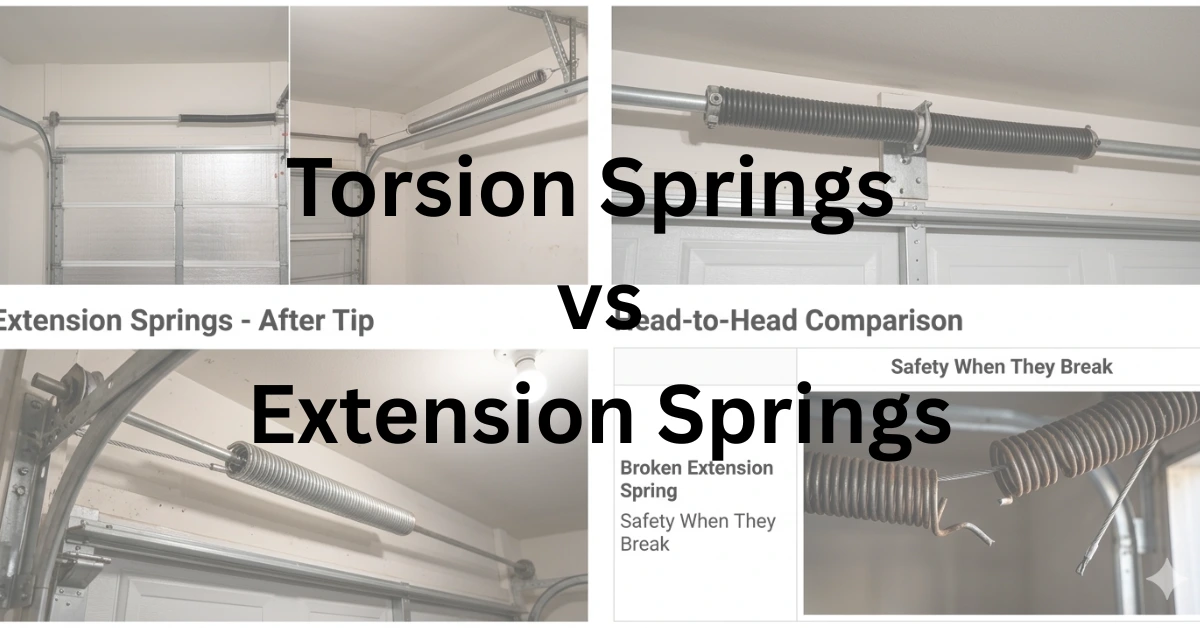
Torsion springs sit horizontally above the door opening. They store rotational energy and are the more common, more durable type.
Extension springs run along the sides of the door tracks. They stretch and contract as the door moves, working independently on each side.
Both types have a rated cycle lifespan, typically between 10,000 and 20,000 cycles. One cycle equals one open and one close. If your family uses the garage door four to six times a day, that lifespan can run out in as little as four to seven years.
Now let us talk about what failure actually looks like.
Sign 1: Your Garage Door Feels Unusually Heavy
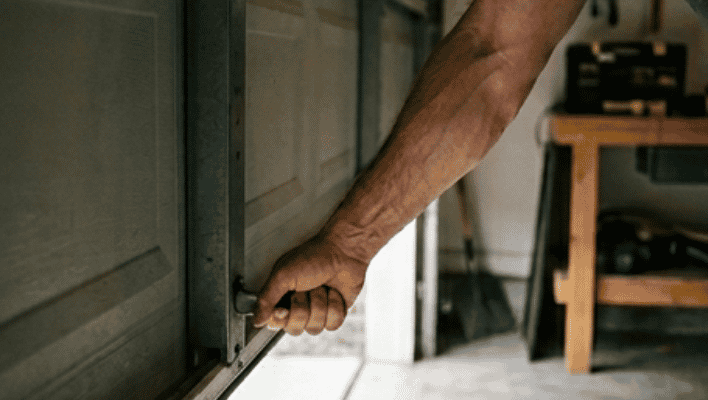
Here is a simple test that takes ten seconds. Disconnect your automatic opener using the emergency release cord, then try to lift the door manually. It should rise smoothly and stay in place at about waist height without much effort.
If it feels like you are lifting a refrigerator, or if it drops back down the moment you let go, your spring is no longer doing its job. The counterbalance system has failed, meaning the full dead weight of the door is now transferring to your arms and to your opener motor every single cycle. This is also one of the leading reasons homeowners search for help when their garage door is not opening all the way and in most cases, a weakening spring is the hidden culprit.
This is often the very first sign people notice, and most dismiss it as the opener getting old. Nine times out of ten, it is the spring.
Pro Tip: Do the balance test twice a year, especially before winter. Springs lose tension faster in cold temperatures because metal contracts. A door that passes the balance test in summer may fail it in January.
Sign 2: You Heard a Loud Bang From the Garage
This one is unmistakable, and it is how many people first discover a broken torsion spring.
You are inside the house. A sound like a gunshot or a firecracker comes from the garage. You go to check and nothing seems obviously wrong at first glance. No intruder. Nothing fell off the shelf. But your garage door will not open.
What happened is that the torsion spring snapped under tension and unwound rapidly. That sudden release of stored energy is what creates that explosive sound. The coils spin violently on the shaft, and the whole thing happens in under a second.
If you heard that sound, do not attempt to operate the door. The spring has already broken. Forcing the opener to run without spring support can burn out the motor or bend the top panel of the door.
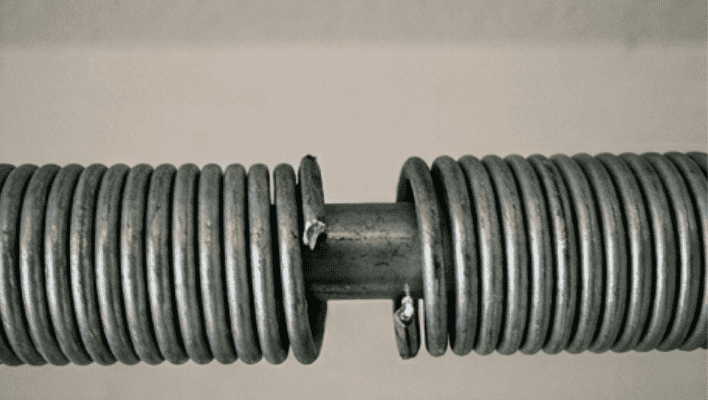
Pro Tip: After a loud bang, check the torsion spring above your door before touching anything. Look for a visible separation in the coil. If you see a gap of roughly two inches in the middle of the spring, that is a confirmed break. At that point, the spring repair is strictly a job for a trained technician because a wound torsion spring holds up to 400 pounds of force.
Sign 3: The Door Opens Unevenly or Looks Crooked
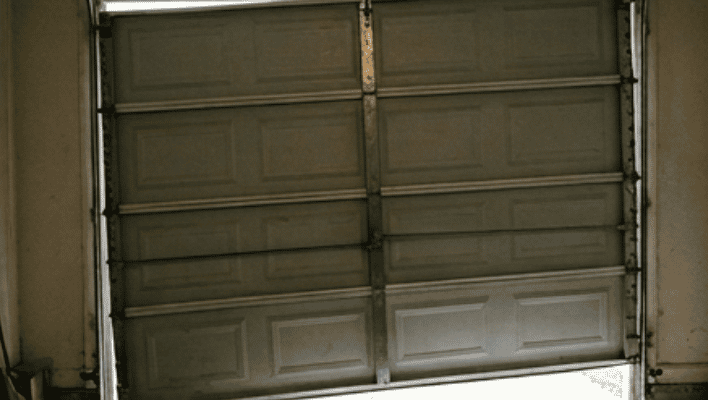
This one is sneaky because the door still moves, so most homeowners assume everything is fine.
Watch your door the next time it opens. Does one side rise faster than the other? Does the door look slightly tilted, like one corner is dragging? Does it jerk instead of gliding smoothly?
This is almost always an extension spring problem. Because extension springs work independently on each side of the door, if one weakens or breaks entirely, the other side takes over and pulls unevenly. The door becomes lopsided inside the tracks, and if you keep operating it in that condition, the rollers can pop out, the cables can snap, and the whole track system can get damaged.
What started as a spring issue quickly becomes a full system repair if ignored. If the door is already crooked and getting stuck mid-track, you may also want to know why your garage door gets stuck halfway, the causes often overlap.
Pro Tip: Uneven movement also puts extreme stress on the garage door opener’s drive system, whether it uses a belt, chain, or screw drive. If you catch this early, you are protecting your opener from premature failure too. A professional can often resolve the imbalance with a spring tension adjustment before a full replacement is even necessary.
Sign 4: You Can See a Visible Gap or Rust in the Spring
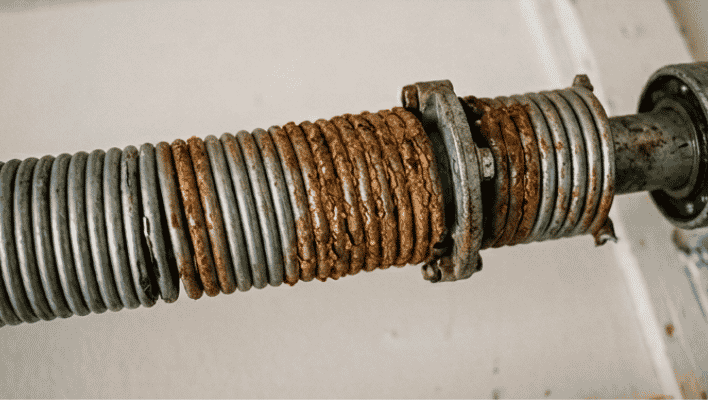
Walk into your garage right now and look up. If you have a torsion spring, it sits mounted on a shaft directly above the door opening. The spring should look like one continuous, tightly wound coil from end to end.
If you see a gap anywhere along that coil, the spring has already broken. There is no gray area here. A two inch separation between coils means the spring snapped and the tension is gone.
Rust is the earlier warning that most people miss. A spring developing orange or brown corrosion along its coils is a spring approaching failure. Rust increases friction between the coils as the spring winds and unwinds, which accelerates wear and dramatically shortens the remaining cycle life.
Similarly, look for coils that appear flattened, stretched out unevenly, or warped. These are signs of metal fatigue that precede a complete break.
Pro Tip: Lubricate your torsion or extension springs every six months using a dedicated garage door lubricant spray, not WD-40, which actually strips protective coatings over time. A proper lubricant reduces friction between coils, slows rust formation, and can add years to the spring’s lifespan. This is genuinely one of the highest return on investment maintenance tasks a homeowner can do. If you want a full checklist for garage door maintenance service covers lubrication, tension checks, and hardware inspection all in one visit.
Sign 5: Your Garage Door Opener Is Struggling or Acting Strange
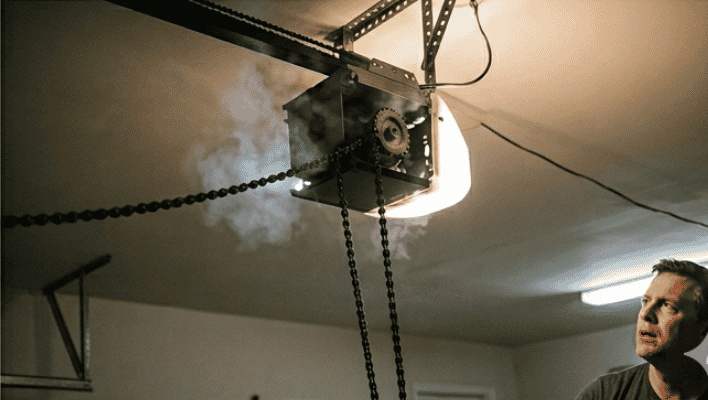
Your automatic opener, whether it is a belt drive, chain drive, or direct drive motor, is designed to assist a spring that is already doing most of the lifting. It is not designed to lift the full weight of the door alone.
When springs weaken, the opener compensates. You will notice it in a few ways. The motor sounds louder or strains audibly as the door rises. The door moves slower than it used to. The opener reverses the door partway through without being triggered by the safety sensors. If your opener is reversing on its own mid-cycle, that specific behavior has its own set of causes. In some cases, the opener opens the door only three to six inches and then stops, which is actually a built-in safety feature in modern openers designed to prevent motor burnout.
A lot of homeowners replace their opener at this stage thinking the motor is old, only to have the same problems return immediately. The opener was never the issue.
Pro Tip: Before calling for opener repair or replacement, disconnect the opener and test the door manually. If the door is heavy or does not stay open on its own, the spring system is the real problem. Replacing only the opener without addressing the springs is a waste of money and will shorten the new opener’s life significantly.
What Happens If You Ignore These Signs?
The door does not just become annoying. It becomes dangerous.
A garage door with a failing spring can slam shut without warning if the remaining tension gives out mid-cycle. It can bend or crush the top panel when the opener tries to force it open. Loose cables caused by spring failure can snap and create a whip hazard inside the garage. And a door that will not close properly leaves your home exposed.
The average cost of a proactive spring replacement is significantly lower than repairing an opener, replacing bent panels, or realigning a damaged track system after a full failure.
Torsion vs Extension Springs: Does the Type Change What You Watch For?
Mostly no, but there are small differences worth knowing.
With torsion springs, the most visible warning signs are a gap in the coil, a loud bang, and a door that will not budge at all after failure. Because torsion springs are a single integrated system, when one goes, the full door stops.
With extension springs, the door may still partially operate after one breaks because the springs work independently. This makes failure easier to miss but also means uneven movement and a crooked door are more common warning signs to watch.
Both types require professional replacement. The tension stored in either system is enough to cause serious injury to someone without the right tools and training.
The Bottom Line
Your garage door spring will tell you it is failing before it actually breaks. A heavy door, uneven movement, a loud bang, visible rust or gaps in the coil, and a struggling opener motor are all messages from the same source.
The smartest move is to treat any one of these signs as a reason to call a garage door technician for an inspection, not wait until you are locked out of your garage at seven in the morning with a car inside and nowhere to be late. And if the door is already beyond repair after years of spring wear, it may be time to explore a new garage door installation that comes with fresh hardware rated for thousands more cycles.
Catch it early. Repair costs less. And more importantly, nobody gets hurt.