Garage Door Reverses
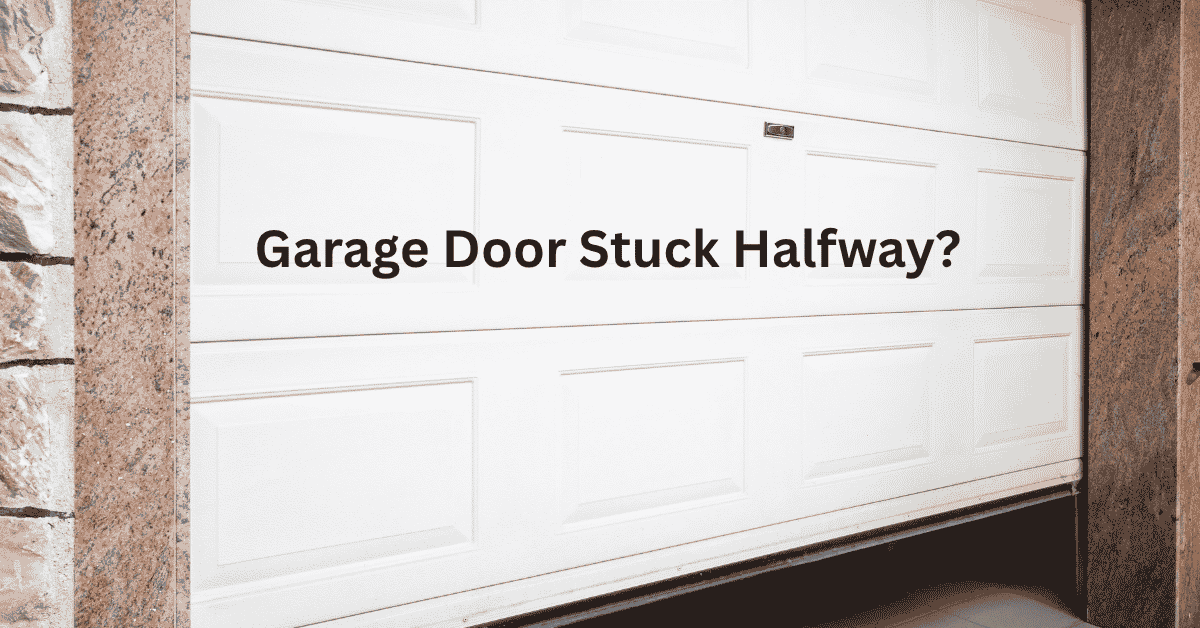
A garage door that reverses before fully closing is responding to one of two things: a real or false obstruction detected by its safety sensors, or a force and limit setting telling the motor to stop and go back up.
The six most common causes are:
- Misaligned or dirty photo eye sensors
- Incorrect close limit settings on the opener
- Force sensitivity calibrated too low
- Worn rollers or debris causing track resistance
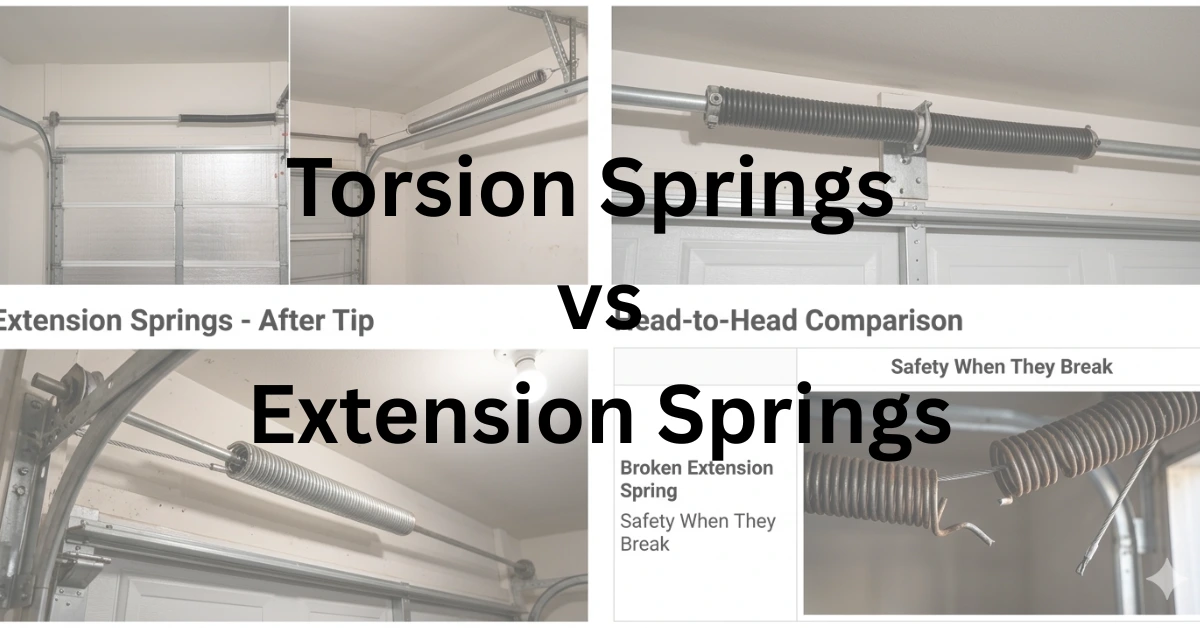
- Weak or unbalanced torsion springs
- Swollen weatherstripping at the door base
South Florida’s intense afternoon sun, year-round humidity, and salt air accelerate every single one of these causes. This guide covers all of them with clear structure symptoms first, then why it happens, then exactly what to do about it.
Try This One Test Before Reading Any Further
Press and hold the wall button continuously while the door closes. Do not release it until the door shuts completely.
Does the door close fully when you hold the button? Your photo eye sensors are almost certainly the cause. Holding the button bypasses sensor checks on most LiftMaster, Chamberlain, Genie, and Wayne Dalton openers.
Does the door still reverse even while holding the button? The problem is mechanical springs, rollers, tracks, or force calibration. Keep reading.
This single test splits every reversal case into two categories and saves a lot of unnecessary troubleshooting.
What Sunrise FL Service Data Actually Shows
Before getting into causes, here is real field data from service calls across Sunrise, Inverrary, Sunrise Lakes, Lauderhill, and Tamarac over the past two years:
| Cause | % of Reversal Issues Handle |
| Misaligned or dirty photo eye sensors | 41% |
| Incorrect close limit or force settings | 23% |
| Worn rollers causing track resistance | 17% |
| Spring imbalance or weak torsion spring | 11% |
| Weatherstripping or debris at door base | 5% |
| Logic board or wiring fault | 3% |
Four out of ten reversal calls in Sunrise are a sensor issue fixed in under ten minutes. Start there every time.
Why Garage Doors Suddenly Start Reversing
This is one of the most common things homeowners ask us. The door worked perfectly yesterday. Today it reverses every single time. Nothing changed or did it?
Here is what actually causes sudden reversal behavior in South Florida homes:
Overnight humidity spiked. Broward County’s rainy season brings dramatic overnight humidity increases. Weatherstripping absorbs moisture and swells. Rollers stiffen. The extra friction suddenly exceeds the force sensitivity threshold the opener was calibrated for.
Sensor vibration shift. A truck driving past, a door slam, or even a lawnmower running near the garage can shift a sensor bracket by a fraction of an inch enough to break alignment. The door was fine at 9 AM and reversed by noon with no obvious explanation.
Power outage resetting opener settings. After a Florida power interruption, some LiftMaster and Chamberlain units reset their close limit and force parameters to factory defaults. Factory defaults are conservative and often too sensitive for South Florida conditions.
Seasonal expansion. The start of summer in Broward County brings temperature jumps that cause metal tracks to expand slightly. What fit perfectly in March creates just enough additional resistance in June to trigger the force sensor.
Worn springs reaching their failure point. Torsion springs fail suddenly and without warning. A spring that was fine last week may have completed its final cycle overnight. The door becomes too heavy for the opener’s calibrated force setting and reverses to protect the motor.
Main Causes: Garage Door Reverses Before Closing
Misaligned or Dirty Photo Eye Sensors
Symptoms you will notice:
- Door starts closing, stops partway, and reverses
- Reversal is inconsistent sometimes fine, sometimes not
- Sensor LED is blinking or off
- Problem only happens in the afternoon
Why it happens in Sunrise FL specifically:
South Florida’s afternoon sun angle is a cause that most national garage door articles never mention. West-facing garages throughout the Sawgrass corridor, Inverrary, and western Sunrise neighborhoods receive direct sunlight into the receiver sensor lens between roughly 3 PM and 6 PM. The sensor reads this as an obstruction and reverses the door. The homeowner is baffled because the door works perfectly all morning.
Beyond sunlight, Broward County’s humidity causes dust, mold spores, and condensation to accumulate on sensor lenses faster than in dry climates. A sensor perfectly clean three months ago may have enough film on the lens today to weaken the beam intermittently.
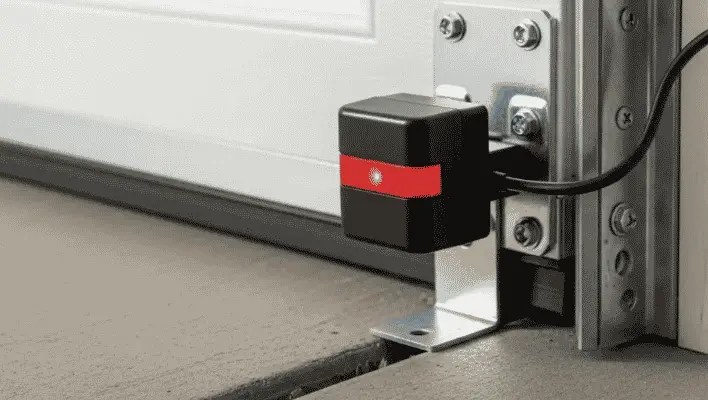
Quick test: Look at both sensors near the floor. The transmitter (typically green LED) and receiver (typically amber or red LED) must both show a solid, steady light. A blinking LED means the beam is broken. Manually block and unblock the beam with your hand the LED should react immediately.
How to fix it:
Step 1 Wipe both sensor lenses with a dry microfiber cloth. No liquid cleaners.
Step 2 Check the floor area for any obstruction: a leaf, spider web, or storage box shifted too close to the frame.
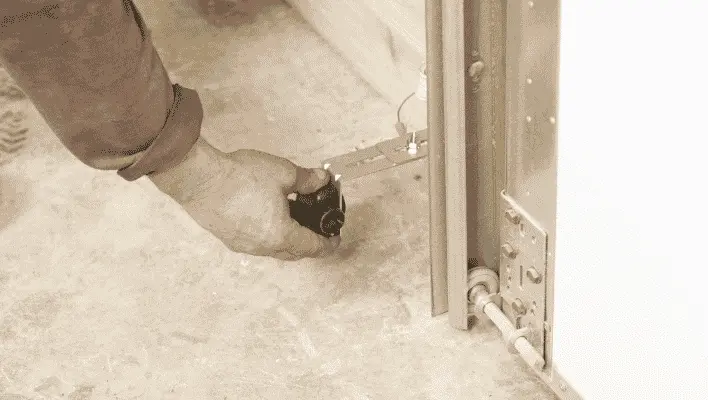
Step 3 If an LED is blinking, loosen the wing nut on that bracket. Gently reposition until the LED goes solid. Retrieve.
Step 4 If the afternoon sun is suspected, place a small cardboard shade above the receiver sensor temporarily. If the door closes cleanly with the shade in place, sunlight is confirmed as the cause.
When to call a pro: If LEDs will not go solid after cleaning and realignment, the sensor housing may be cracked, corroded, or internally damaged. Replacement typically runs $75 to $150 in Broward County. If you are dealing with repeated sensor issues, garage door sensor repair service covers full replacement and realignment with same-day availability.
Incorrect Close Limit Settings Causing Reversal at the Floor
Symptoms you will notice:
- Door travels all the way to the floor, makes contact, then immediately bounces back up
- Happens every single time without fail completely consistent
- Reversal occurs at the exact same point every cycle
Why it happens:
The close limit setting tells your opener motor exactly how far to move the door before stopping. If this setting is too long, the motor pushes the door past the floor, senses the concrete as resistance, and interprets it as an obstruction. The auto-reverse fires and the door goes back up.
In Sunrise, FL, close limits drift for two specific reasons. First, Florida power surges during storm season reset opener settings on LiftMaster, Chamberlain, Genie, Craftsman, and Amarr-compatible units. Second, South Florida’s concrete floors expand in summer heat; the effective floor level shifts slightly, enough to trigger this problem in the hottest months.
Quick test: Watch exactly where the reversal happens. Does the door:
- Touch the floor and reverse immediately? The close limit is set too far.
- Reverse before reaching the floor at all? Skip to force sensitivity below.
How to fix it:
LiftMaster and Chamberlain units have a small adjustment dial on the side of the motor marked “Down” or “Close Limit.” Turn counterclockwise in quarter-turn increments. Test after each small adjustment.
Genie and Linear openers use a programming button and arrow key sequence. Consult your specific model manual.
Craftsman and Marantec units have limit adjustment screws on the back of the motor unit.
The goal is a door that closes fully, seals against the floor, and stops without any reversal and without the motor continuing to run after contact.
Pro Tip: Never adjust close limit and force settings simultaneously. Change one variable, test fully, then adjust the other if needed. Changing both at once makes it impossible to identify which fix worked.
When to call a pro: If adjusting the limit dial in either direction does not produce a clean close, or if the adjustment mechanism is physically damaged, opener calibration service is the right call. This is also a good time to ask about a full garage door tune-up in Sunrise, which includes limit and force recalibration as standard.
Force Sensitivity Calibrated Too Low
Symptoms you will notice:
- Door reverses partway during closing not when it reaches the floor
- Happens more often on humid days or after the door has sat unused for a few days
- Door visibly slows or struggles before reversing
- Garage door goes back up halfway down
Why it happens:
Every opener has a force sensitivity setting controlling how much resistance the motor will tolerate before triggering a reversal. If this setting is too sensitive, normal friction from the door’s own weight, the weatherstripping, or slightly stiff rollers on a humid morning registers as an obstruction.
This is the most climate-sensitive calibration in the system. South Florida humidity causes metal components to swell and weatherstripping to stiffen. A force setting calibrated perfectly in January can be too sensitive by July when heat and moisture have increased friction throughout the door system.
Quick test: Press gently upward on the bottom panel while the door is closing. If this small amount of extra resistance immediately causes reversal, the force setting is too sensitive.
How to fix it:
Most LiftMaster and Chamberlain openers have a force adjustment button or dial near the limit controls. Increase close force in small increments and test after each change.
After any force setting adjustment, always perform the CPSC safety test: place a 2×4 board flat on the floor in the door’s path. The door must reverse when it contacts the board. If it does not reverse, the force setting is now too high and is a safety hazard. Reduce it until the door reverses reliably on the 2×4 before increasing further.
When to call a pro: If increasing force does not stop the reversal, the underlying friction source needs to be identified. Worn rollers, tight tracks, or spring imbalance are the usual culprits. A technician can locate exactly which component is adding resistance and address the root cause rather than masking it with a force adjustment.
Worn Rollers or Binding Tracks Creating Resistance
Symptoms you will notice:
- Grinding, squealing, or clicking sounds as the door closes
- Door slows visibly at a specific point in its travel
- Garage door reverses halfway down at the same location every time
- Door wobbles or moves unevenly going down
Why it happens:
When a roller cracks, chips, or seizes particularly steel rollers in South Florida’s humidity it creates friction that the opener’s force sensor reads as an obstruction. The opener reverses rather than risk damaging the motor.
Track binding creates the same outcome. A slightly bent section, a mounting bracket pulled from the wall, or debris packed into the track channel all produce drag the motor cannot power through without triggering a safety reversal.
Nylon rollers perform significantly better than steel in Broward County conditions. We recommend them as a direct replacement upgrade on every service visit in Sunrise.
Quick test: Walk alongside the door and watch it close slowly. Look for any visible point where the door slows or hesitates. Listen for sounds that occur at the same location every cycle. Consistent noise at a specific point points directly to that section of track or the roller on that panel.
How to fix it:
Lubrication first. Apply a silicone-based garage door lubricant to rollers, hinges, and the inside of the track. Never use WD-40; it is a degreaser, not a lubricant, and actively strips the existing protective coating rather than adding to it.
Minor track sections that have pulled slightly from the wall can sometimes be repositioned and the mounting bolts retightened. Severely bent or creased track sections need replacement.
Cracked, flat-spotted, or seized rollers need replacing. Most panels are safe to address but the bottom roller near the cable drum involves spring tension and should be handled professionally.
When to call a pro: Any track damage in the horizontal overhead section, any door that has come partially off track, or any roller replacement involving the bottom bracket and cable drum. For off-track situations, do not operate the door at all and reach out to a professional garage door repair in Sunrise, which handles it as a same-day emergency.
Weak or Unbalanced Torsion Springs
Symptoms you will notice:
- Door reverses partway during closing and feels very heavy
- Door drifts downward on its own when manually held halfway
- Opener motor sounds like it is straining during operation
- Door hangs unevenly one side noticeably lower than the other
- Garage door won’t stay shut and keeps coming back up
Why it happens:
Torsion springs counterbalance the full weight of your door anywhere from 130 to 350 pounds depending on material and insulation. When a spring loses tension or breaks, the door becomes heavier than the opener was designed to lift. The motor senses the excess resistance and activates the auto-reverse safety mechanism.
A two-spring system with one weakened spring causes door imbalance: the door tilts slightly toward the heavier side, binds against the track, and triggers a force-detection reversal.
In Sunrise, FL, torsion springs corrode faster than their rated lifespan assumes. Humidity and salt air cause micro-pitting on internal spring coil surfaces that weakens tension gradually before any visible signs appear. Springs rated for 10,000 cycles under dry-climate assumptions regularly need attention at 6,000 to 7,000 cycles in Broward County homes.
The manual balance test do this now:
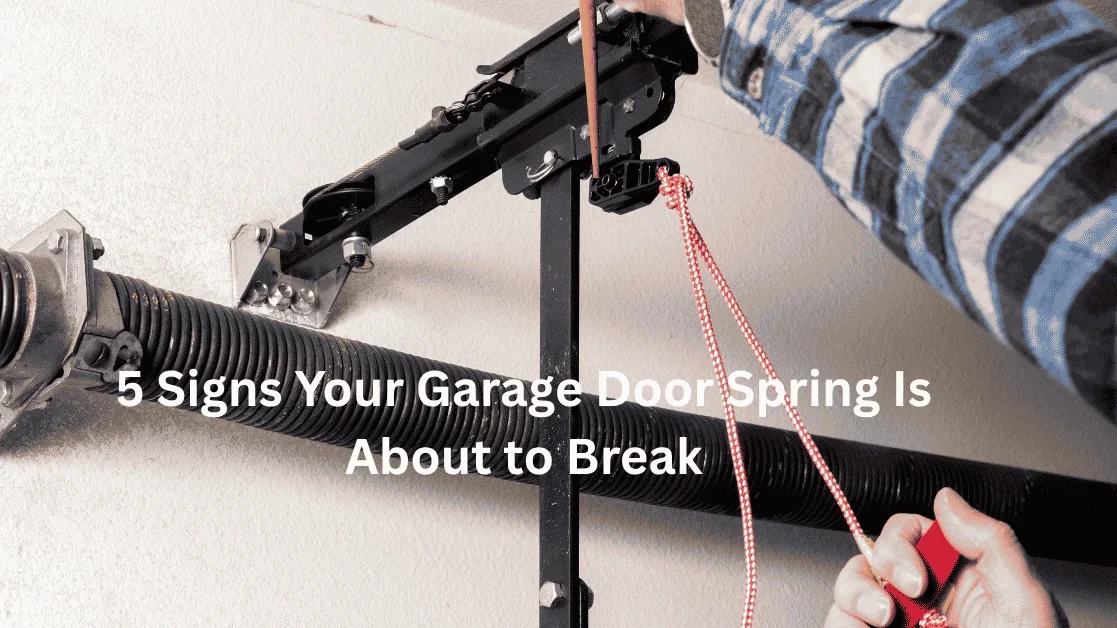
Pull the emergency release cord (red rope from the trolley) to disconnect the opener. Manually lift the door to waist height and carefully let go.
- Door stays in place: Springs are balanced and properly tensioned.
- Door falls down: Springs are too weak and cannot support the door’s weight.
- The door rises on its own: Springs are over-tensioned.
If the door does not stay in place, a spring issue is contributing to or causing your reversal problem.
When to call a pro: Always, without exception. Torsion spring work involves components under hundreds of pounds of stored energy. This is the single most dangerous DIY repair in home maintenance. Local experts handle broken spring repair in Sunrise FL as a same-day service and carries springs for all major door brands and weight classes on every truck.
Swollen Weatherstripping or Debris at the Door Base
Symptoms you will notice:
- Door reverses only in specific weather right after heavy rain or on particularly humid days
- Reversal happens exactly at floor contact, not during travel
- Visible swelling, compression, or uneven sealing along the bottom strip
Why it happens:
The rubber weatherstripping along the door base creates a seal against the garage floor. When this seal absorbs moisture and swells, very common in Broward County’s rainy season, it makes contact with the floor earlier than the close limit expects. The opener detects this early resistance as an obstruction and reverses.
After heavy rain events in Sunrise, swollen weatherstripping is a surprisingly frequent cause of sudden reversal issues in homes that had no previous problems.
Quick test: Inspect the bottom seal before operating the door. Is it visibly swollen, stiff, or compressed unevenly? Clear any debris from the floor beneath the door dirt, leaves, or standing water residue.
How to fix it: Clean the floor surface beneath the door thoroughly. If the weatherstripping is swollen, cracked, or creating an uneven seal, replacement solves the problem cleanly. This typically runs $50 to $100 for the part and labor.
Scan This First: Full Symptom Diagnostic Table
| What You Are Seeing | Most Likely Cause | First Step |
| Reverses at same point mid-travel every time | Sensor beam broken or misaligned | Check both sensor LEDs |
| Reaches floor then immediately bounces back up | Close limit set too far | Watch contact point timing |
| Reverses midway, motor sounds strained | Spring imbalance or failure | Run manual balance test |
| Reverses more on humid days | Force sensitivity too low | Gentle upward pressure test while closing |
| Reversal only in afternoon, fine in morning | Sunlight hitting receiver sensor | Shade receiver temporarily and test |
| Grinding at same spot before reversing | Worn roller or bent track section | Walk door down slowly and listen |
| Closes fine holding wall button, not with remote | Photo eye sensor issue | Hold-to-close test confirms it |
| Reverses only after rain or in rainy season | Swollen weatherstripping | Inspect bottom seal visually |
5-Step Diagnostic Checklist: Run These in Order
Step 1 Hold-to-close test: Hold wall button until door fully closes. If it works, sensors are your starting point.
Step 2 Check sensor LEDs: Both must be solid. If blinking, clean both lenses and realign the blinking sensor bracket until solid.
Step 3 Manual balance test: Disconnect opener, lift door to waist height, release carefully. Does it stay or fall?
Step 4 Watch and listen during a slow close: Does the door slow at a specific panel? Hear grinding at a consistent location? That is your problem spot.
Step 5 Inspect the bottom weatherstripping: Any visible swelling, stiffness, or debris buildup along the base seal?
Call a Pro Immediately If You See Any of These
- Manual balance test shows the door falls on its own
- Visible gap or break in the torsion spring coil above the door
- Door hanging unevenly one side noticeably lower
- Opener motor grinding or producing a burning smell
- Door lurching or jumping during movement
- All five diagnostic steps completed with no improvement
For urgent situations, emergency garage door repair in Sunrise FL is available same-day across all of Broward County.
Why Sunrise FL Homeowners Face This Problem More Often
The Afternoon Sun Issue No One Talks About
West-facing garages in Sunrise, Inverrary, and the Sawgrass corridor receive direct sunlight at exactly the receiver sensor angle between roughly 3 and 6 PM. Most national garage door articles never mention this. It is one of the most common misdiagnosed reversal causes we see in South Florida.
Year-Round Wear With No Slowdown
No cold winters means no reduction in daily cycle counts. A Sunrise household using the door five times daily reaches spring and roller wear limits months faster than a household in a colder climate where winter reduces usage significantly.
Rainy Season Force Calibration Drift
Broward County’s rainy season genuinely changes how your door behaves mechanically. Smart maintenance means having force and limit settings recalibrated at the start of summer not after problems appear. This is part of every garage door maintenance visit.
Salt Air and Spring Corrosion
Every home in Sunrise sits within the salt air influence zone from the Atlantic Coast. Internal spring coil surfaces develop micro-corrosion that weakens tension before any visible signs appear. Annual spring inspection is the only way to catch this before a sudden failure.
What Garage Door Reversal Repairs Cost in Sunrise FL
- Sensor cleaning and realignment: Usually no charge during a diagnostic visit
- Sensor replacement (per unit): $75 to $150 including labor
- Close limit or force recalibration: $50 to $100 service visit
- Nylon roller full set replacement: $100 to $200
- Track realignment: $125 to $250
- Torsion spring replacement (per spring): $150 to $350
- Weatherstripping replacement: $50 to $100
- Opener logic board replacement: $150 to $300
Always get a written flat-rate estimate before authorizing any work. Verify the technician holds a valid Florida contractor license through the Department of Business and Professional Regulation.
Frequently Asked Questions
Why does my garage door go back up after closing completely? If the door touches the floor and immediately reverses, the close limit is almost certainly set too far. The motor contacts the floor, reads it as resistance, and fires the auto-reverse. Adjusting the down limit in small increments resolves this in most cases.
Why does my garage door reverse halfway down? A mid-travel reversal points to either a sensor issue or a force sensitivity setting that is too low. Run the hold-to-close test first. If the door closes while holding the button, the sensors are causing it. If it still reverses while holding the button, the force setting or a mechanical friction source is the cause.
Why did my garage door suddenly start reversing with no warning? Sudden reversal behavior most commonly follows a humidity spike, a power outage resetting opener settings, or a torsion spring reaching its failure point. The balance test will tell you immediately whether the spring is involved.
Is it safe to keep using a garage door that auto-reverses? Short term, yes especially if you can close it manually or by holding the wall button. Do not ignore it beyond a few days. Repeated reversal cycles stress the opener motor and accelerate wear on springs and rollers. Address the root cause promptly.
Can I disable my sensors to stop the garage door from reversing? No. Safety sensors are a federal requirement on all openers manufactured after 1993. Disconnecting them removes the protection that prevents the door from closing on a person, pet, or obstacle, and likely affects your homeowner’s insurance coverage. Fix the underlying problem rather than removing a safety system.
My sensor LEDs are both solid but the door still reverses. What next? Solid LEDs confirm alignment but do not confirm sensor function. A sensor with internal damage or a corroded housing can appear aligned while sending false signals. Replace the sensors themselves as the next diagnostic step.
How often should a garage door be serviced in Broward County? Twice per year for South Florida homes. Spring service before rainy season lubrication, weatherstripping check, force and limit recalibration. Fall service after hurricane season spring corrosion inspection, sensor alignment verification, opener calibration check.
Why does my garage door close fine in winter but reverse every summer? This is a Broward County-specific pattern caused by seasonal humidity increasing friction throughout the door system. The force sensitivity calibrated for dry-season conditions is too tight once the rainy season begins. Seasonal force recalibration at the start of summer solves this permanently.
Key Takeaways
- Start with the hold-to-close test every time it immediately narrows the cause to sensors or mechanical
- Four out of ten reversal service calls in Sunrise FL are a sensor issue fixed in under ten minutes
- South Florida’s afternoon sun angle is a uniquely local sensor interference cause most national articles never mention
- Always run the CPSC 2×4 safety test after adjusting force settings do not skip this step
- Sudden reversal behavior after a storm likely means an opener setting reset check limit and force calibration first
- Torsion spring work is never a DIY repair the stored energy involved makes it genuinely dangerous
- Seasonal recalibration at the start of summer is smart preventive maintenance in Broward County’s climate