A garage door that opens by itself is almost always caused by one of four things:
- A stuck button on a remote or wall panel sending a continuous signal
- Radio frequency interference from nearby devices triggering the opener
- A corroded wall button or wiring short caused by South Florida humidity
- A lightning-damaged logic board firing random motor signals
In our experience servicing Sunrise and Broward County, surge-related logic board failure and wall button corrosion are the two most common causes we see both directly tied to Florida’s climate. We will cover every cause below in a format you can actually use.
Safety First: If your door is opening unexpectedly and you cannot identify why immediately, unplug the opener from the ceiling outlet and manually slide-lock the door from inside until you find the cause.
What Sunrise FL Service Actually Show
Before we get into causes, here is something you will not find in any generic garage door article.
Based on our service calls across Sunrise, Lauderhill, Tamarac, and Inverrary over the past three years, here is what is actually causing phantom garage door openings in South Florida homes:
| Cause | Estimated % of Cases |
| Lightning surge / logic board damage | 34% |
| Wall button corrosion or wiring short | 26% |
| Stuck or faulty remote control | 19% |
| RF interference from LED bulbs or neighbor openers | 11% |
| Misaligned photo eye sensors triggering reversal | 7% |
| Incorrect close limit settings | 3% |
What this means for you: If your phantom opening started right after a Florida thunderstorm, there is a one-in-three chance it is a surge-damaged logic board. Skip straight to Cause 3 below if that is your situation.
Cause 1: Stuck or Wedged Remote Control
Symptoms
- Door opens randomly but only sometimes
- Problem started after you changed your car or cleaned out a drawer
- Happens at no particular time of day
Why It Happens
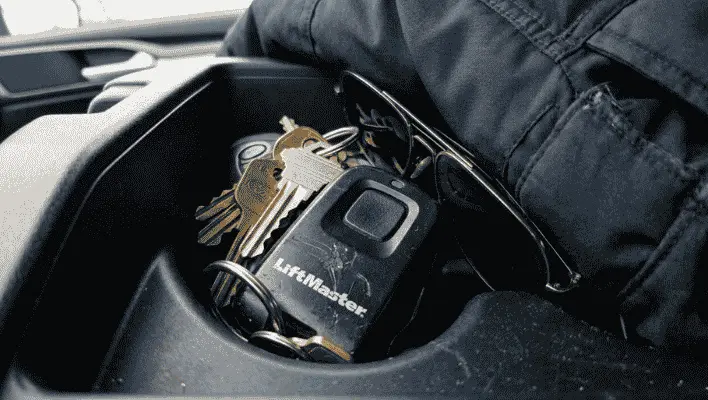
Your remote button is physically pressed against something like a car console, a jacket pocket, a bag and sending a continuous activation signal without you knowing it. Even a partially depressed button can trigger the opener. We see this more often than you would expect, especially after people clean out their vehicles.
Quick Test
Remove the battery from every remote in your home and all vehicles. Watch for 24 hours. If the phantom openings stop, a stuck remote was your problem.
Fix
Replace the faulty remote entirely. A sticky button does not repair itself. Attempting to unstick it by opening the casing usually causes more damage. New remotes for LiftMaster, Chamberlain, and Genie openers are available for $25 to $60 and program in under two minutes.
When to Call a Pro
You do not need a technician for this one. New remote, problem solved.
Cause 2: Radio Frequency Interference
Symptoms
- Door opens without anyone pressing a button
- Openings seem to happen at specific times (when a neighbor leaves or arrives)
- Remote range feels shorter than usual
- Problem started after you installed new LED bulbs in the garage
Why It Happens
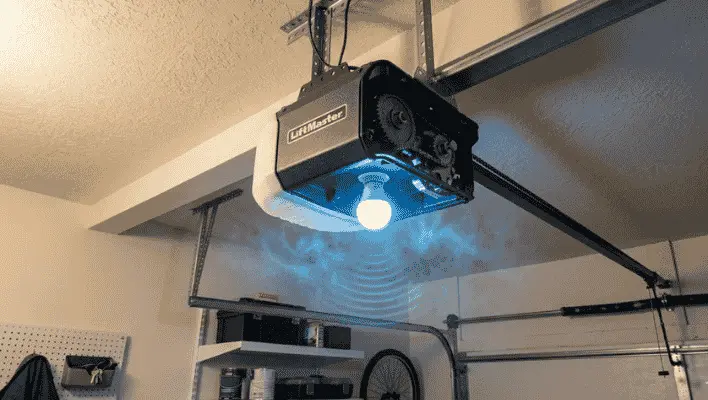
Garage door openers receive signals on radio frequencies between 300 MHz and 400 MHz. Other devices that transmit on similar frequencies can accidentally trigger your opener. This is especially common in the denser residential areas of Broward County where you have multiple homes, multiple openers, and multiple wireless devices in close proximity.
Devices that commonly cause interference in Sunrise, FL homes:
- Cheap LED light bulbs (a well-documented issue low-quality LEDs emit radio noise across a wide range)
- A neighbor’s older fixed-code garage door opener on the same frequency
- Wireless security cameras and baby monitors
- New smart home devices recently added to your network
Field Note from Our Team: We had a call in the Sunrise Lakes area last year where a homeowner’s door was opening every evening around 6 PM. Turned out a neighbor had just installed a new opener that shared the same fixed-code frequency as their 2003 Genie unit. Upgrading to a rolling-code opener solved it immediately.
Quick Test
- Turn off or remove LED bulbs near the opener temporarily
- If the problem stops, those bulbs are the interference source
- If not, note whether openings happen on a pattern (specific times, specific days)
Fix
| Situation | Fix |
| LED bulbs causing interference | Replace with opener-compatible LEDs (LiftMaster and Chamberlain both sell approved bulbs) |
| Neighbor’s opener sharing your code | Upgrade to a rolling-code opener |
| Unknown RF source | Change the frequency on your opener if supported, or upgrade |
When to Call a Pro
If removing LED bulbs and resetting the frequency does not stop the interference, a technician can use diagnostic equipment to identify the exact interference source and test whether your logic board has been affected.
Cause 3: Lightning Surge Damaging the Logic Board
This is the most common cause we see in Sunrise, FL. Read this one carefully.
Symptoms
- Phantom openings started directly after a thunderstorm
- Opener lights are flashing in unusual patterns
- LiftMaster blink codes on the motor unit indicate a fault
- Remotes and keypad stopped working around the same time
- Door behaves erratically opens, closes, stops randomly
Why It Happens
Florida leads the entire United States in lightning strike frequency. Broward County experiences intense afternoon storm activity from June through October. A lightning strike does not have to hit your home; a nearby strike sends a voltage surge through your neighborhood’s electrical infrastructure and into your home’s outlets.
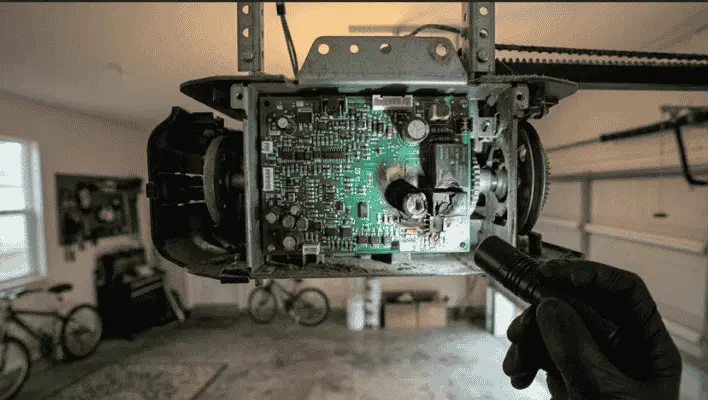
The logic board inside your opener is essentially a small computer. A transient voltage spike can corrupt its firmware or physically damage relay components. What you experience as “phantom opening” is the board misfiring the motor relay sometimes hours or even days after the original surge.
Quick Test
- Check whether the opener’s indicator light is solid or flashing
- Count the blink pattern on a LiftMaster unit and look up the fault code in your manual
- Plug a different appliance into the same outlet to confirm the outlet is functioning
Fix
Logic board replacement is the standard repair for surge damage. The board is brand and model specific; a Chamberlain board will not fit a Genie unit. Cost in Broward County runs between $150 and $300 for parts and labor.
Prevention going forward: A surge protector rated for motor loads costs $20 to $40 and plugs directly into the outlet your opener uses. This single investment protects a $400 to $600 opener from Florida’s storm season. Every Sunrise homeowner should have one. No exceptions.
Ready for a same-day diagnosis? If your opener starts acting up after a storm, our Sunrise technicians carry logic boards for all major brands and can test and replace yours in a single visit.
When to Call a Pro
Always. Logic board replacement requires sourcing the exact model-specific board, proper voltage testing with a multimeter, and safe handling of the motor unit wiring. This is not a DIY repair.
Cause 4: Corroded Wall Button or Wiring Short
Symptoms
- Phantom openings happen at no obvious pattern
- Problem gets worse during or after humid weather
- You have noticed flickering behavior from the opener before
- Openings sometimes happen in the middle of the night
Why It Happens
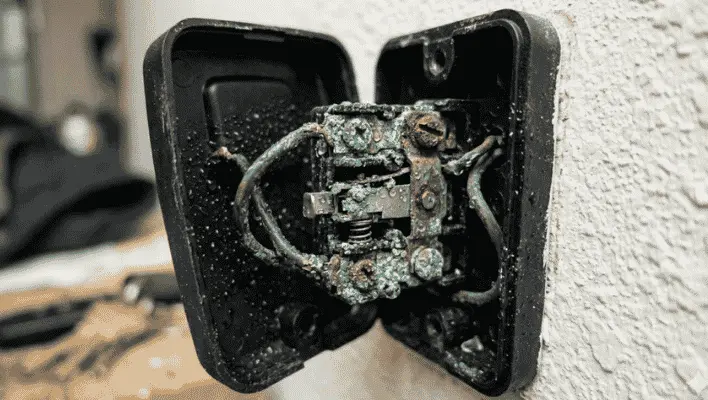
The wall button inside your garage sends a low-voltage signal to the opener through a two-wire hardwired connection. If the button develops an internal short or if the wire running between the button and the motor unit gets corroded, pinched, or chewed the logic board reads a constant “open” command.
South Florida’s year-round humidity is brutal on low-voltage wiring contacts. In our experience servicing Sunrise homes, wall button corrosion shows up 2 to 3 times faster here than the national average because of the combination of heat, humidity, and salt air. If your garage is not climate-controlled, that button housing is baking and sweating year-round.
Nighttime phantom openings specifically are a strong signal for a wiring short. Temperature drops at night cause metal wiring to contract, which can bring two corroded or bare spots on a damaged wire into contact creating a momentary short that the logic board reads as a button press. The short clears on its own when the wire warms up in the morning, so you find nothing wrong when you check. Then it happens again three nights later.
Quick Test
Go to the motor unit on the ceiling. Find the two low-voltage wires connected to the wall button terminals. Temporarily disconnect them. Leave them disconnected for 24 hours and watch whether phantom openings continue.
- Openings stop: The wall button or wire run is your culprit
- Openings continue: Move to the logic board diagnosis
Fix
- Wall button replacement: straightforward, under $75 including labor in most cases
- Wiring short: a technician traces the full wire run and replaces any damaged sections
Internal Link: See our [Garage Door Sensor Repair page] if the issue turns out to be related to sensor wiring rather than the wall button circuit.
When to Call a Pro
If the wall button replacement does not resolve it, or if you suspect the wiring run itself has been damaged, especially if you have seen any signs of rodent activity in your garage, call a professional garage door repair expert to trace and replace the wiring safely.
Cause 5: Misaligned Photo Eye Sensors Triggering a Reversal

Symptoms
- Door closes partway then reverses and rises back up
- This looks like the door “opened by itself” but it is actually a safety reversal
- One or both sensor LEDs are blinking rather than showing a solid light
- Problem gets worse in the afternoon when sunlight angle changes
Why It Happens
The photo eye sensors near the floor shoot an infrared beam across the door opening. If anything interrupts that beam during closing including Florida’s intense afternoon sunlight hitting the receiver lens directly the opener reverses the door as a safety response.
In Sunrise, the afternoon sun angle combined with west-facing garages is a particularly common setup for this false-trigger problem. We also see humidity and condensation blurring sensor lenses regularly after the rainy season, and storm debris landing near sensor brackets and slightly shifting their alignment.
Quick Test
Look at both sensors. Both LEDs should be solid, not blinking. If either blinks, the beam is broken or misaligned.
- Wipe both lenses with a dry microfiber cloth
- Loosen the wing nut on the blinking sensor’s bracket
- Reposition gently until both LEDs go solid
- Retighten and test
Fix
Sensor realignment is often a no-cost DIY fix. If the LEDs will not go solid after alignment, the sensor itself is damaged and needs replacement typically $75 to $150 for parts and labor.
When to Call a Pro
When physical realignment does not resolve the blinking, or when sensor wiring appears damaged or corroded.
Cause 6: Incorrect Close Limit Settings
Symptoms
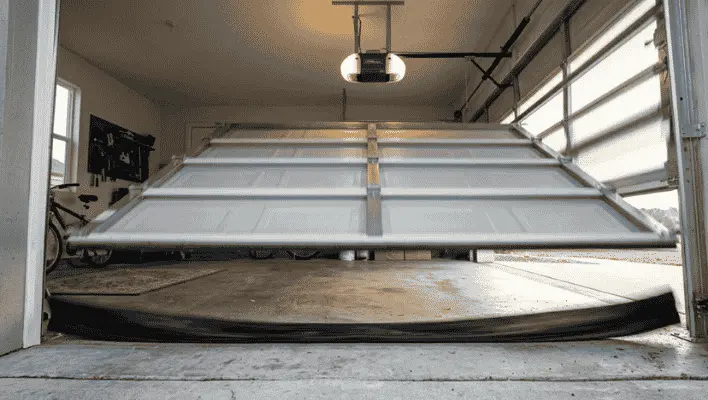
- Door closes fully, touches the ground, then immediately reverses and opens
- This happens every single time not randomly
- Problem started after a power outage or storm reset the opener
Why It Happens
Your opener’s close limit setting tells the motor exactly where the fully closed position is. If this setting is off, the motor thinks the door has not reached the floor yet and sends it back up to try again. This is not truly a phantom opening it is the opener attempting to complete a cycle it believes is unfinished.
Quick Test
Watch the door close completely. Does it touch the ground and then immediately reverse within one or two seconds? If yes, the close limit is the cause.
Fix
On LiftMaster and Chamberlain units, adjust the close limit dial on the motor unit marked “Down” or “Close.” Turn incrementally and test after each adjustment. Genie units use a programming button sequence. Your owner’s manual has exact steps for your model. This is a DIY-friendly fix.
The Full Diagnostic Table Scan This First
| Symptom You Are Seeing | Most Likely Cause | First Test to Run |
| Random openings, no pattern | Stuck remote or RF interference | Remove all remote batteries for 24 hours |
| Started after a storm | Logic board surge damage | Check blink codes on motor unit |
| Happens at night, not daytime | Wiring short due to temperature | Disconnect wall button wires overnight |
| Door closes then immediately reverses | Incorrect close limit settings | Watch whether reversal is instant every time |
| One sensor LED blinking | Misaligned or dirty photo eye sensor | Clean lens and realign bracket |
| Happens when neighbor leaves or arrives | RF frequency conflict | Test by isolating remotes and LED bulbs |
5 Checks You Can Do Right Now (In This Order)
Step 1: Remove batteries from every remote vehicle and all wall remotes. Wait 24 hours.
Step 2: Turn off or remove LED bulbs in and around the garage. Watch for 24 hours.
Step 3: Look at both sensor LEDs near the floor. Both must be solid. If blinking, clean and realign.
Step 4: Disconnect wall button wires from the motor unit terminals. Watch for 24 hours.
Step 5: Check inside your remote’s battery compartment. DIP switches visible? You have an outdated fixed-code system that needs upgrading.
Fixed-Code vs Rolling-Code: Why It Matters
If your opener is more than 15 years old, this section is important.
| Feature | Fixed-Code Opener (Pre-2000s) | Rolling-Code Opener (Modern) |
| How the code works | Same code sent every time | New encrypted code every button press |
| Vulnerability to neighbor’s remote | Yes 256 possible combinations only | No billions of possible codes |
| Vulnerability to RF scanning | Yes | Virtually impossible |
| Recommended in 2026 | No | Yes |
| Example models | Old Genie, Craftsman with DIP switches | LiftMaster Security+ 2.0, Chamberlain Intellicode |
If your remote has a row of tiny flip switches inside the battery compartment, you have a fixed-code system. In the dense neighborhoods of the Broward County Sunrise Lakes, Inverrary, Sawgrass corridor the chances of a frequent conflict with a neighbor’s opener are real. Upgrading is the only permanent fix.
Stop Troubleshooting and Call a Pro If You See Any of These
- Phantom openings started right after a lightning storm and blink codes are showing on the motor
- You smell something burning near the opener unit
- The door is opening AND closing randomly in rapid sequence
- You completed all five steps above and the problem continues
- Your opener is 15-plus years old with recurring unexplained behavior
Why This Problem Hits Sunrise, FL Harder Than Most Places
Lightning Frequency
Florida leads the US in lightning strikes per year. Broward County sits in one of the most active zones in the state. Surge damage to opener logic boards is measurably more common here; we see it regularly in Sunrise, Lauderhill, Tamarac, and Oakland Park. A surge protector on your opener outlet is not optional in South Florida. It is basic maintenance.
Humidity and Corrosion
Year-round high humidity accelerates corrosion on wall button contacts, sensor housings, and antenna wire terminals inside the motor unit. Components that last 10 years in a dry climate routinely show corrosion failures at 5 to 6 years in Sunrise homes especially in uninsulated garages where temperatures can exceed 120°F in summer.
Neighborhood Density
The closer homes are together, the more wireless devices, more garage door openers, and more RF overlap. For older fixed-code systems in areas like Sunrise Lakes and the Sawgrass corridor, this density is a real practical problem.
How Much Does This Cost to Fix in Sunrise, FL?
| Repair | Cost Range in Broward County |
| Remote replacement | $30 to $80 |
| Wall button replacement | $50 to $75 including labor |
| Sensor realignment | Usually free during diagnostic visit |
| Sensor replacement | $75 to $150 |
| Logic board replacement | $150 to $300 |
| Surge protector installation | $20 to $40 plus labor |
| Full opener replacement (LiftMaster, Chamberlain, Genie) | $300 to $600 installed |
Always ask for a written flat-rate estimate before authorizing work.
Frequently Asked Questions
Is someone breaking into my garage remotely? With any modern rolling-code opener (identifiable by a Learn button on the motor unit), this is virtually impossible. Rolling codes change with every single button press using encrypted sequences from billions of possibilities. If you have an older DIP switch system, a code conflict is possible but usually accidental rather than intentional. Upgrade to a rolling-code opener to eliminate the concern permanently.
Why does my garage door only open by itself at night? Nighttime temperature drops cause metal wiring to contract. If your wire run has any damaged or corroded sections, those spots make contact at night and create a short that mimics a button press. The short clears itself when the wire warms up in the morning, leaving no obvious evidence. Disconnect the wall button wires overnight to confirm.
Can a power outage cause phantom openings? Yes. Some opener models cycle the door when power is restored after an outage. If phantom openings only happen after power interruptions, this is a programmable behavior in the opener settings. Check your manual under “Power Restore” behavior.
Will reprogramming my remote fix this? Only if the cause is a frequency conflict with a neighbor’s fixed-code opener. Reprogramming clears and resets the code, which removes accidental matches. For any other cause stuck button, wiring short, surge damage, sensor issue reprogramming has no effect.
My opener is 18 years old. Should I just replace it? Honestly, yes. A 15-plus year old opener using fixed-code technology is a security and reliability liability. Modern units with rolling-code technology, myQ smart control, battery backup, and surge protection are significantly more capable and cost $300 to $600 installed. The repair costs on an aging board often approach that number anyway.
How do I prevent this from happening again? Three practical steps for Sunrise, FL homeowners specifically: install a surge protector on your opener outlet before the next storm season, replace cheap LED bulbs in and around the garage with opener-compatible LEDs, and schedule an annual tune-up so a technician can catch corroding contacts and wiring wear before they cause problems.
Key Takeaways
- The most common cause of phantom openings in Sunrise, FL is lightning surge damage to the logic board start there if your problem followed a storm
- Wall button corrosion is the second most common cause in South Florida specifically, driven by year-round humidity
- Most causes can be narrowed down in under 30 minutes using the five-step diagnostic checklist above
- Fixed-code openers (DIP switch technology) are a genuine security and reliability liability in 2026 upgrade if yours predates rolling-code technology
- A $20 to $40 surge protector prevents the single most expensive and most common repair we see in Broward County
Sunrise Garage Door Pros serves Sunrise, FL and all surrounding Broward County communities Sunrise Lakes, Inverrary, Springtree, Welleby, Lauderhill, Tamarac, and Oakland Park. We carry logic boards, sensors, remotes, and full replacement openers for LiftMaster, Chamberlain, and Genie on every truck. Same-day service available. Call now or book online.